I’ve been at every stage of this journey—from solo webcam warrior to managing a team of seven producers creating 61 digital events a year. And here’s what nobody tells you: each stage has its own superpowers AND its own breaking points.
Let’s talk about where you are right now and how to make the most of it while building toward what’s next.
🧍 If you’re flying solo:
I see you handling EVERYTHING. The emails. The tech checks. The hosting. The follow-up. The 2 am panic about whether you remembered to send the webinar link.
When I officially launched the livestream series “Typography Dojo” back in 2016, it was just me with a webcam and earbuds. My internet wasn’t fast, so we had a few video and audio dropouts. Definitely wasn’t broadcast quality. I hosted the event on Crowdcast and did a live interview with my friend Nikki for about 45 minutes. There were 67 attendees and 7 questions.
You know what the worst part was? I had to do all the setup and never knew if people could hear me or see me. I’d be mid-sentence, wondering if people were staring at my forehead or a blurry mess. Not exactly confidence-inspiring when you’re trying to build authority in your space.
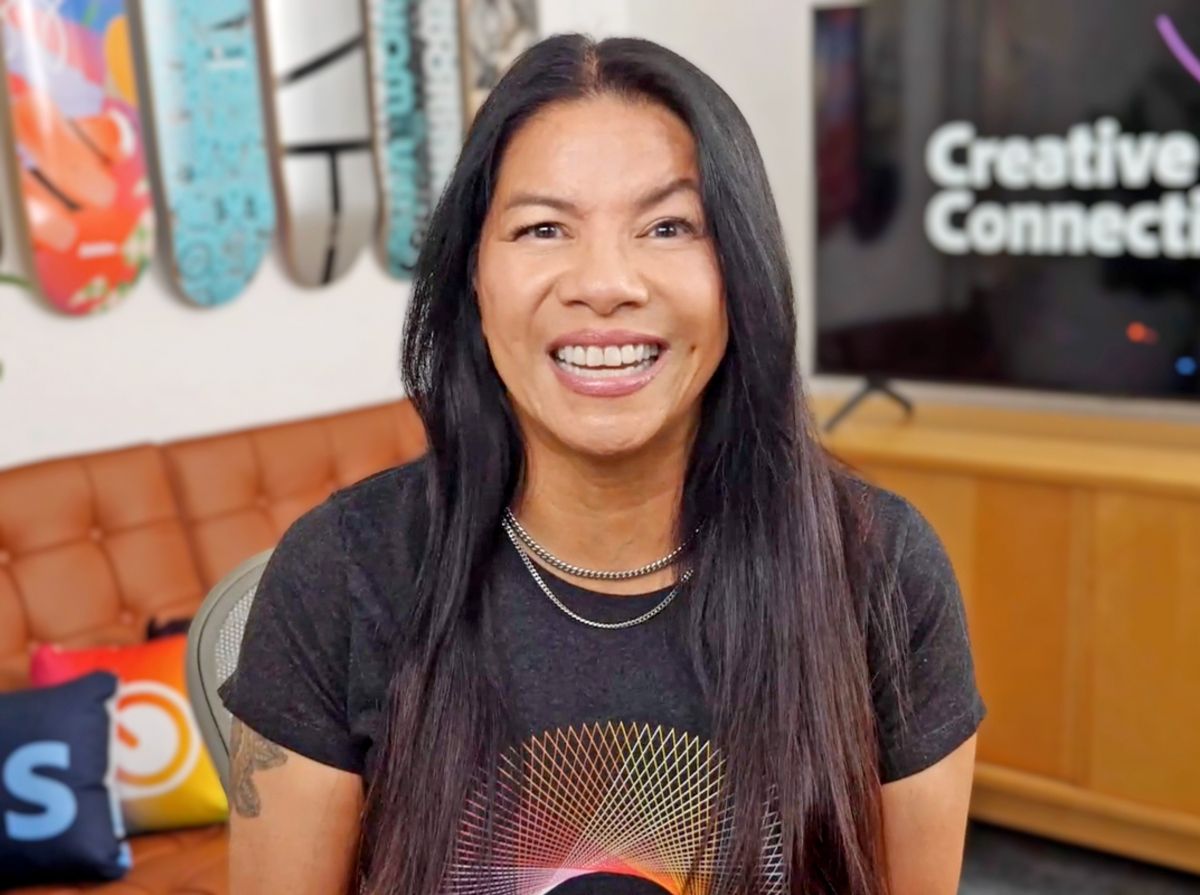
I used my solo-hosting nerves when I got to Adobe and started running virtual Creative Jams (photo above). And here’s what I learned after running those livestreams solo before expanding the team:
What to focus on:
Automate the repetitive stuff. Template those emails and registration flows. I wish I could’ve automated emails to each of the teams—the way our corporate Outlook was set up wouldn’t allow me that, and it ate up HOURS every week. Learn from my pain: if your email system can’t automate, find one that can.
Script your show. When you’re live and your heart is racing, you’ll thank yourself for mapping out those talking points. I didn’t do this until we had a tech fail with our Disney Jam, and I was deer in the headlights because anxiety took over. Yup, I learned this the hard way—there’s a reason I keep my script on a teleprompter now.
Keep it tight. A focused 20-minute session beats a sprawling hour where you’re scrambling to do everything yourself. Your audience’s attention span will thank you.
The breaking point: You’ll know it’s time to get help when you’re spending more time on logistics than on creating great content. For me, that moment came after two Creative Jams when I realized I couldn’t simultaneously manage tech, host with energy, AND make sure student teams were getting the support they needed.
Game-changer move: Get someone (anyone!) to handle chat and tech during your live event. It will transform your hosting experience overnight. When David Carr-Berry joined the Jam team, I could finally trust that the camera was focused and the lighting looked good? Game over. I could actually focus on hosting and get back to the customer experience for attendees and customer champions.
Real talk on budget: My first Typography Dojo events cost maybe $300 to start and about $150/month to maintain in hard costs. That’s it. You don’t need a massive budget to begin—you need consistency and a willingness to show up imperfectly.
🤝 If you have a small-but-mighty team:
You’ve got a few people helping, but everyone’s wearing multiple hats. I get it—this was us at TypeEd when we started scaling our workshops.
But the real test of my ability to build and lead a small team came when I produced the Design Educators Typography Intensive (DETI) for the Hoffmitz Milken Center for Typography (HMCT). Our DETI team was just four people: Exec Director Gloria Kondrup as host, a broadcast technician (who I helped train and prep), me doing double duty as content producer and line producer, and Susan as engagement manager. We had to punch way above our weight.
The biggest challenge? Designing a run of show that spanned 2–3 days, with breakout rooms and Q&A sessions between every speaker. The logistics were wild—especially wrangling VIP attendees into private breakouts while they were glued to the main session, not their inbox. We iterated on this process every year, learning to set clearer expectations and streamline the attendee experience.
What made it work:
Systems: We built detailed run-of-show docs, tech checklists, speaker onboarding emails, and a preflight tech list.
Role-shaping: I learned to shape roles around people’s strengths and the actual workload. Sometimes, with a small team and a heavy run of show, it’s smarter to simplify the format and focus on what you can execute well.
Letting go of perfection: I realized not everything has to be perfect. Sometimes it’s better to let the personality and authenticity of the team and the room shine through. Live events are unpredictable—sometimes things go sideways, but that’s part of the fun and what makes the experience memorable.
How we measured success: Attendance, smooth execution, and real engagement (plus, DETI was a fundraiser—so ticket sales mattered too).
Biggest lesson: You can’t control everything, and you shouldn’t try. The best moments often come from letting the culture and vibe of the room shape the experience organically. Sometimes, the magic is in the mess.
I carried these lessons straight into my work at Adobe. When I started managing larger teams and more complex programs, I never forgot the power of a tight, nimble crew—and the importance of building systems that let people shine, not just execute.
📋 If you lead a production team or crew:
You’re in leadership mode now. This is where I finally found myself at Adobe, managing a team of seven producers and managers creating live-streaming demand and engagement programs for creative and marketing professionals.
Your job isn’t running tech checks anymore (though you could)—it’s empowering your team while you focus on the bigger picture.
When I started managing the team, I was able to stop worrying about the tech production, aligning with stakeholder teams (marketing ops, email, legal), and just focus on growing the program. That shift was HUGE. Suddenly, I had brain space to think about the full GTM loop—strategy, audience experience, community-building—and what we could build next.
Your priorities:
Be the vision-setter, not the task-master. Trust your team with execution details they’ve mastered. My team knows how to run a flawless show—I focus on what story we’re telling and who needs to be in the room.
Document everything. Build that playbook so the show can go on even when you’re not there. We created systems that let us produce 61 events in FY24 while maintaining quality.
Obsess over audience experience. With logistics handled, you can focus on engagement, flow, and creating those memorable moments that turn audiences into communities.
Here’s the scale difference: Typography Dojo might’ve gotten up to 150 attendees at its peak. Creative Connections got thousands—up to 3,500 live. One Creative Jam got over 6,000 people live. That’s not just growth—that’s a completely different animal that requires systems, not hustle.
Our Creative Connections program consistently hit 40-45% attendance rates—significantly above industry standards—because we designed for connection, not just content delivery. In FY24, our programs attracted 118,976 total registrations across all digital events, with 44,015 attendees generating 33,632 MQLs.
The breaking point: You’ll know you’ve outgrown this stage when you’re ready to build multiple shows, franchises, or train other teams to replicate your model.
Level-up move: Start experimenting with new formats and engagement tactics. At Adobe, I thought everyone would just submit boards for The Perfect Match, but that didn’t happen fast enough. We had to up the incentive. That taught me that even with a big team and budget, you still need to test your assumptions and adapt quickly. Let your team handle execution while you explore what's next.
Real talk on budget: Typography Dojo cost maybe $300 to start and $100/month. An Adobe show with labor and materials? At least $15K per show. But the principles of good event design apply whether you’re spending $150 or $15K. It’s about knowing your audience and creating experiences they actually want to show up for.
🪑 If you’re just here to learn or support:
Not in the producer’s chair yet? That’s awesome. You’re in observation mode, and that’s incredibly valuable.
I started as a volunteer at AIGA events before producing my own. I spent years organizing panels, coordinating studio visits, and watching designers light up when they met their heroes. That was my real education in event production, though I didn’t know it at the time.
What to focus on:
Notice everything. How do hosts handle awkward moments? How do they transition between segments? What makes people feel welcome? I learned more from watching great hosts work than from any course.
Start super small. Host a 1:1 session or lead a peer group. Low stakes, high learning.
Be someone’s right hand. Offer to moderate chat or test tech. These supporting roles give you insider access to how successful events actually work.
You’re ready to level up when: You’re proactive and thinking ahead. You’re anticipatory, with strong attention to detail. You’re always thinking about the attendee and their experience. Those are the signals I look for when I’m building a team—and they’re the same signals that tell you you’re ready to step into a bigger role.
First step move: Guest-host a segment or facilitate a breakout room. No pressure—just play and learn as you go.
What If You’re Stuck?
Sometimes you have a team, but it’s not working. Or you’re solo and overwhelmed but can't afford help. Or you’ve scaled up but lost the magic that made your early events special.
I've been there. We kept coaching and coaching a team member who wasn’t working out. Finally, the rest of the team had to take on the burden until we could remove that team member. It was hard, but it was necessary. Sometimes clear roles and honest conversations fix 80% of team problems. The other 20%? You need to make hard calls about fit.
Here’s what I’ve learned about being stuck:
Stuck solo? Start with one 30-minute conversation with someone who’s done what you want to do. Just one. Ask them how they got help. That’s how I found David Carr-Berry.
Stuck with the wrong team? Clear roles and honest conversations fix most problems. But if someone’s not proactive, not thinking ahead, not focused on the customer? That’s a fit issue, not a training issue.
Stuck at scale? Go back to basics. Watch a recording of your early work. What made it special? How can you bottle that magic in your systems?
The Timeline Nobody Talks About
Here’s the reality: It took six years to go from earbuds-and-webcam Rachel in 2016 to managing-a-high-performing-team Rachel in 2022.
It wasn’t overnight. It wasn’t even fast. But every event taught me something. Every audience was different. The best community builders are constantly experimenting, adjusting, and improving.
Within three years of launching Typography Dojo, I had 55 episodes, exponentially grew my network, and helped propel my visibility in the design and type communities—all by creating a platform to help give a spotlight to type designers and typographers who were doing amazing work.
Fast forward to Adobe: In FY24, our programs attracted 118,976 total registrations across all digital events, with 44,015 attendees generating 33,632 MQLs. Our engagement programs achieved consistent 40-45% attendance rates and cultivated a highly engaged community with over 1,500 challenge submissions.
That’s the difference between solo and scaled. But both matter. Both have value. Both are part of the journey.
Every Creative Leader Starts Somewhere
Remember that every event host you admire started with technical glitches and awkward moments... and probably couldn’t see if their camera was focused on their face! The difference isn’t natural talent—it’s that they kept showing up, refining their approach, and gradually building the support they needed.
Wherever you are in your journey, embrace it. Use what you have, learn from each experience, and take one step toward the event leadership you want.
Let’s build the creative community we all need—one event, one team, one stage at a time.